
Veteran politician Mirza Fakhrul Islam Alamgir has been sworn in as Bangladesh's 23rd President, following a contested parliamentary election that saw him defeat Colonel (retd) Oli Ahmed. Alamgir, a longtime secretary general of the ruling Bangladesh Nationalist Party (BNP), will serve a five-year term.

A heated parliamentary showdown unfolded as NDA and INDIA bloc MPs clashed at Parliament's main gate.

The Lok Sabha passed two Bills, including one to rename Kerala as Keralam, without debate as Opposition members continued their protests, demanding Union Home Minister Amit Shah's presence to address police excesses against student protesters and alleged Ram temple fund irregularities.

More than half of the bills introduced in the 18th Lok Sabha have been passed by both Houses in the same session, a significant acceleration compared to previous terms, raising concerns about the time available for legislative scrutiny and stakeholder consultations.

The Congress party has issued a whip to its MPs in both the Rajya Sabha and Lok Sabha, mandating their presence from August 10-12 for discussions on "very important" issues. This directive comes amidst reports of potential debates on the Foreign Contribution (Regulation) Amendment Bill, 2026, and a Constitution Amendment Bill concerning delimitation, though the government's official business list did not explicitly mention these.

The question for the next 20 years is not whether India can become a $5 trillion or $10 trillion economy. Those are attractive targets, but the real question is whether India can create enough productive jobs, educate its children properly, make its cities liveable, and give hundreds of millions of people a substantially better life, asserts Ramesh Menon.

Mirza Fakhrul Islam Alamgir, secretary general of the ruling Bangladesh Nationalist Party (BNP) and a close ally of former premier Khaleda Zia, has been elected as Bangladesh's new President in the first contested poll for the post in 35 years.
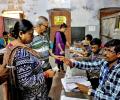
A joint parliamentary committee tasked with examining the 'One Nation One Election' bill has been granted an extension until the end of the Winter session to submit its report. The 41-member committee is reviewing the Constitution (One Hundred and Twenty-Ninth Amendment) Bill, 2024, and is conducting nationwide consultations on implementing simultaneous elections for Lok Sabha, state assemblies, and local bodies by 2029.

Parliamentary Affairs Minister Kiren Rijiju met Leader of Opposition Rahul Gandhi to discuss resolving the persistent deadlock in the Lok Sabha's monsoon session, focusing on the Delimitation Bill and FCRA Bill, though no immediate commitment was secured from the Congress leader.

The Congress and BJP are engaged in a political spat over the implementation of the Women's Reservation Bill and its proposed link to delimitation, with Rahul Gandhi urging unconditional implementation of the 2023 law and Kiren Rijiju highlighting the constitutional requirement for delimitation based on post-2026 census figures.

Rahul Gandhi's aggressive street politics is giving him a fresh political edge, but overplaying his role could hurt his credibility with the wider opposition, predicts M R Narayan Swamy.

An Indian Parliamentary standing committee has demanded an apology from Meta chief Mark Zuckerberg within three days for the temporary removal of Prime Minister Narendra Modi's video from Facebook, threatening to withdraw immunity under the IT Act if he fails to comply. The committee also pushed for government action against Google India regarding financial fraud.

Vice President CP Radhakrishnan launched Gnani Artha, an end-to-end sovereign AI stack for Indian enterprises and public institutions. He emphasised that new technologies, including AI, will enhance ease of work and create more jobs, drawing parallels with the IT industry's growth. The initiative, backed by the India AI Mission, aims for self-reliance and includes the Gnani Evon v3.3 language model and Gnani Plexus AI platform, offering cost-effective Indic language capabilities.
Vice President CP Radhakrishnan launched Gnani Artha, an end-to-end sovereign AI stack for Indian enterprises and public institutions. He emphasised that new technologies, including AI, will enhance ease of work and create more jobs, drawing parallels with the IT industry's growth. The initiative, backed by the India AI Mission, aims for self-reliance and includes the Gnani Evon v3.3 language model and Gnani Plexus AI platform, offering cost-effective Indic language capabilities.

A parliamentary panel flagged staffing shortages at NCERT and CBSE, inadequate education spending, falling enrolment and poor internet connectivity in government schools.

Parliamentary Affairs Minister Kiren Rijiju has accused the Opposition of setting pre-conditions for a debate on the critical NEET paper leak issue, stating that the government is ready for a comprehensive discussion.
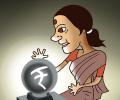
Finance Minister Nirmala Sitharaman clarified that the Merchant Discount Rate (MDR) on digital transactions applies to merchants, not customers, and aims to support banks and fintech in infrastructure investment. She countered Congress leader Jairam Ramesh's claims, stating that a committee will decide on MDR only after Parliament passes the Taxation and Other Laws (Amendment) Bill, 2026, a process currently stalled by parliamentary disruptions.

Prime Minister Narendra Modi on Friday expressed concern over the repeated disruptions of parliamentary proceedings, stating that due to the turmoil in the House, the country has been unable to listen to the talented MPs elected in recent times.

The DMK has been charting an independent course from the Congress-led Opposition bloc on contentious issues during the Monsoon Session, including not joining a walkout over the anti-paper leak bill and participating in a debate on the National Honour Bill, signalling growing fault lines within the Opposition.

Major opposition parties, including Congress, TMC, and SP, boycotted the customary tea party hosted by Lok Sabha Speaker Om Birla after the House was adjourned sine die, while some opposition leaders attended a similar event in the Rajya Sabha.

Prime Minister Narendra Modi has announced comprehensive reforms in the education system to combat paper leaks, following the passage of a new anti-paper leak law. He asserted that there would be no leniency for those involved in examination irregularities, highlighting the government's commitment to ensuring fair opportunities for students.

'Where is the official record? Media bytes are not parliamentary records. What matters is what is recorded on the floor of Parliament. I am not denying that we had a heated exchange.'

The Parliamentary Standing Committee said the proposed comprehensive statutory framework for regulating OTT content should include robust technology-enabled age-verification mechanisms, effective parental controls and suitable penalties for non-compliance.

Shiromani Akali Dal MP Harsimrat Kaur Badal has hinted at a potential re-alliance with the BJP, expressing a desire for "agreements" that bring progress to Punjab from Delhi. This follows a recent meeting between SAD president Sukhbir Singh Badal and Prime Minister Narendra Modi, reigniting speculation about the former allies rejoining forces after their 2020 split over farm laws.

Lok Sabha MP Sudip Bandyopadhyay's closed-door meeting with West Bengal Chief Minister Suvendu Adhikari, just before NCPI MPs were to attend an NDA meeting, has ignited speculation about the Nationalist Citizens Party of India's political future and its potential alignment with the BJP-led alliance. The NCPI comprises 20 rebel TMC MPs who broke away after the West Bengal Assembly election.
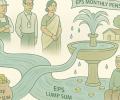
A parliamentary panel has recommended an urgent review of the Rs 1,000 minimum monthly pension under the Employees' Pension Scheme, 1995, to raise it to a more realistic and dignified level, considering the rising cost of living and the financial hardships faced by pensioners.

Home Minister Amit Shah has offered to hold a comprehensive debate in Parliament on student protests and other pressing issues, but Congress leader Rahul Gandhi has swiftly rejected the proposal, demanding accountability for actions against students.

Prime Minister Narendra Modi has appealed to opposition parties to support the delimitation-linked Women's Reservation Bill, highlighting its 40-year struggle. The bill aims to provide 33 per cent reservation for women in legislatures and increase Lok Sabha seats, requiring a two-thirds majority for passage. Despite previous setbacks and ongoing efforts to secure numbers, the government continues to push for this crucial legislation.

The BJP has announced its new national organisational team, with eight leaders from Uttar Pradesh receiving key appointments. These include two national vice-presidents, two general secretaries, two secretaries, and the chiefs of the OBC and Minority Morchas. The appointments reflect a strategic focus on youth, social diversity, and experienced campaigners, particularly after the party's recent electoral setbacks in the state.

Major bills, including those on women's reservation, delimitation, and the Foreign Contribution (Regulation) Act (FCRA), face an uncertain future in the ongoing Monsoon session of Parliament due to persistent opposition protests and a lack of consensus.

Exiled Bangladeshi author Taslima Nasreen has drawn a parallel between the CJP-led protest in Delhi and the 2024 student movement in Bangladesh that ousted Sheikh Hasina's regime, warning that the Bangladesh stir 'fooled us' and was ultimately taken over by 'jihadis'.

The Indian government has confirmed its readiness for a Lok Sabha debate on the ongoing student protests and police action, with Union Home Minister Amit Shah set to address the concerns, particularly those related to the NEET paper leak issue.

The Indian Parliament is scheduled for a significant legislative day, with the Lok Sabha set to consider and pass the Public Examinations (Prevention of Unfair Means) Amendment Bill, 2026. Concurrently, the Rajya Sabha will introduce the Micro, Small and Medium Enterprises Development (Amendment) Bill, 2026, and pass the Prevention of Insults to National Honour (Amendment) Bill, 2026, highlighting a busy agenda for both houses.

The Indian Parliament remains deadlocked as the Opposition, led by the Congress, insists on Prime Minister Narendra Modi's reply to discussions on alleged donation theft at the Ram temple in Ayodhya and student protests, rejecting the government's offer for Home Minister Amit Shah to respond.

The Lok Sabha introduced four significant bills on Monday, including amendments to mines and minerals regulations, the establishment of a National Tribunals Commission, and the renaming of Kerala to Keralam, all while facing continuous protests from opposition members demanding a discussion on the July 20 police crackdown on students.

A parliamentary standing committee on Information Technology has demanded a personal apology from Meta CEO Mark Zuckerberg for the temporary removal of Prime Minister Narendra Modi's video from Facebook. The committee also discussed potential legal action and the withdrawal of safe harbour protection, while questioning Meta officials on algorithmic bias and accountability.

The Supreme Court of India will commence hearings on two significant constitutional matters: the interpretation of legislative privileges of MLAs concerning freedom of speech and expression, and the power of state legislatures to impose additional sales tax levies. Both issues will be heard by seven-judge Constitution benches, with one case stemming from a 2003 plea by journalist N Ravi regarding breach of privilege.

Trinamool Congress MP Mahua Moitra has moved a privilege notice before Lok Sabha Speaker Om Birla against three senior officials, alleging a serious breach of protocol and contemptuous conduct after she was asked to vacate a circuit house in West Bengal's Krishnanagar late in the night on August 14.

The Congress Working Committee has decided to adhere to its 1937 resolution, mandating that only the first two stanzas of 'Vande Mataram' be sung at all party events, a move that has drawn sharp criticism from the BJP, which labelled the Congress the 'new Muslim League'.

The Rajya Sabha has passed The Bankers' Books Evidence Bill, 2026, which aims to replace a British-era law and allow digital and virtual records to be admissible as evidence in courts. This legislation aligns with contemporary digital banking practices and extends a uniform evidential framework to various financial entities, including NBFCs and fintech companies. Finance Minister Nirmala Sitharaman highlighted the bill's role in strengthening public confidence and safeguarding customer privacy. The bill's passage, however, saw an Opposition walkout over unrelated issues.
